
Pour Over Coffee: 7 Essential Tips for the Perfect Cup
Discover the quiet ritual of pour over coffee. Learn the ratio, the technique, and the small adjustments that turn hot water and ground beans into the best cup you've ever made.
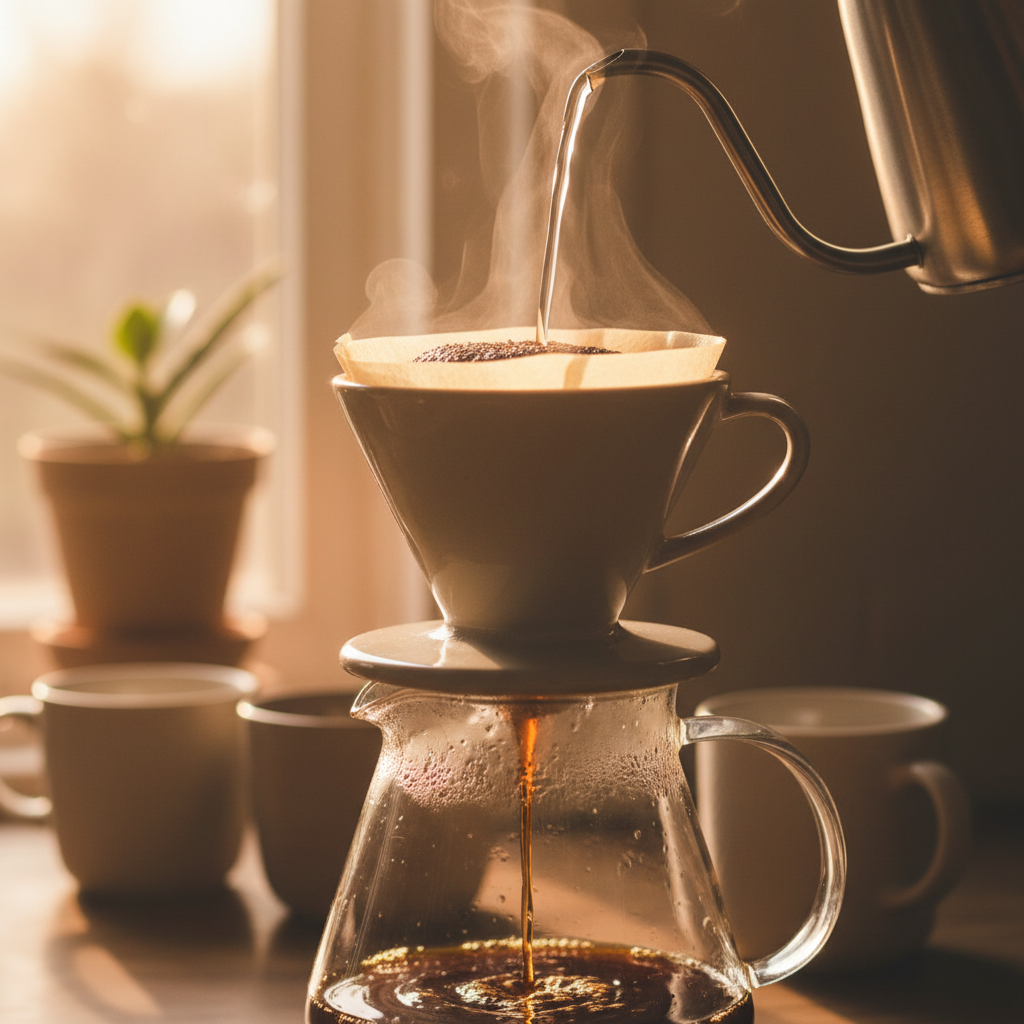
If you've ever watched a barista pour water in slow, deliberate circles over a bed of coffee grounds, you've witnessed the quiet ritual of pour over coffee. It's not just about caffeine, it's about control, clarity, and craft. In this beginner's guide to pour over coffee, you'll learn everything you need to brew a perfect cup at home, from the right ratio to the ideal grind size and pour technique.
What Is Pour Over Coffee?
Unlike drip machines that do everything for you, pour over coffee puts you in charge of every variable: water temperature, pour speed, grind size, and bloom time. The result is a cup that's cleaner, brighter, and more nuanced than anything an auto-drip can produce. Pour-over brewing is a manual method where hot water is poured over ground coffee in a filter, allowing gravity to draw the brewed coffee through into a carafe or mug below.
The beauty of pour over coffee lies in its simplicity. You need only a few tools: a dripper (like a V60, Chemex, or Kalita Wave), paper filters, freshly ground coffee, a gooseneck kettle, and a scale. That's it. Yet within that simplicity lies an extraordinary range of flavor possibilities that automatic brewers simply cannot reach.
Why Pour Over Coffee Tastes Better
Automatic drip machines saturate the grounds unevenly and often brew at the wrong temperature. Pour over coffee, by contrast, gives you precise control over every aspect of extraction. You can adjust the grind, the water temperature, the pour speed, and the total brew time to highlight different flavor notes in the same bag of beans.
This control means you can coax out bright citrus acidity, deep chocolate sweetness, or floral aromatics depending on how you approach the brew. It's the difference between a microwave dinner and a home-cooked meal: the ingredients matter, but the technique transforms them.
The Golden Ratio: Coffee to Water
The foundation of great pour over coffee is the ratio of coffee to water. For most palates, a 1:16 ratio hits the sweet spot, that's 1 gram of coffee for every 16 grams of water. If you prefer a stronger cup, try 1:15; for a lighter, more tea-like brew, experiment with 1:17.
Using a scale is non-negotiable for consistent results. Measuring by volume (tablespoons and cups) introduces too much variation, coffee beans vary in density depending on roast level and origin. Weighing your coffee and water in grams eliminates guesswork and makes every cup reproducible.
Grind Size Matters
Grind size is one of the most important variables in pour over coffee. Too fine, and the water struggles to pass through, over-extracting and producing a bitter, astringent cup. Too coarse, and the water flows through too quickly, under-extracting and leaving you with a weak, sour brew. For a deeper dive, see our guide to coffee grind size.
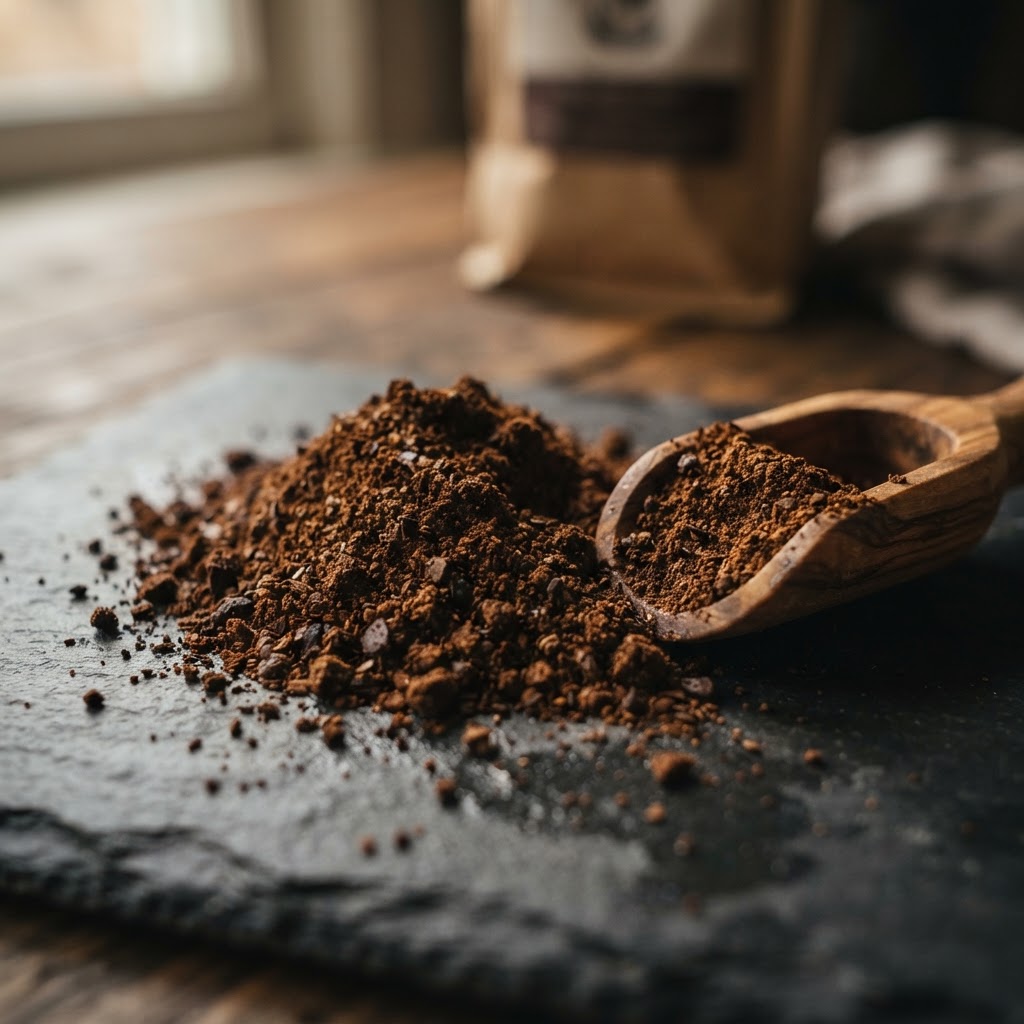
For pour over coffee, aim for a medium-fine grind, somewhere between table salt and sand. If your cup tastes bitter, go coarser. If it tastes sour or weak, go finer. Small adjustments in grind size have a big impact, so change only one variable at a time as you dial in your recipe.
Water Temperature and Quality
The ideal water temperature for pour over coffee is between 195°F and 205°F (90°C to 96°C). If you don't have a thermometer, let a full boil sit for about 30 seconds before pouring. Water that's too hot scorches the grounds; water that's too cool leaves flavor locked inside the beans. Learn more in our guide to water temperature for coffee.
Water quality matters too: coffee is 98% water, so if your tap water tastes off, your coffee will too. Filtered water with a balanced mineral content produces the clearest, sweetest results. Avoid distilled water, which lacks the minerals needed for proper extraction.
The Bloom: Why It Matters
When you first add water to the grounds, they release carbon dioxide, a byproduct of the roasting process. This is called the bloom. Pour just enough water to saturate the grounds (about twice the weight of the coffee) and wait 30 to 45 seconds before continuing.
Skipping the bloom traps CO2 inside the bed, which repels water and causes uneven extraction. A proper bloom ensures that the remaining water flows evenly through the grounds, pulling out balanced, sweet flavors instead of harsh, channeling bitterness.
The Pour Technique
After the bloom, pour in slow, steady spirals from the center outward. A gooseneck kettle gives you the precision you need; a standard kettle's aggressive flow disturbs the bed and disrupts extraction. Aim for a thin, controlled stream that keeps the water level steady.
Divide your total water into two or three pours, waiting for the water level to drop between each one. This pulse-pouring technique keeps the grounds agitated just enough for even extraction without over-saturating any one area. The entire brew should take between 2:30 and 3:30 from the first pour.
Common Mistakes to Avoid
Even experienced brewers slip up. Here are the most common pour over coffee mistakes and how to fix them. First, using stale beans: coffee is best within 2 to 4 weeks of roasting. Buy whole beans and grind just before brewing. Second, pouring too fast: a rushing pour compacts the grounds and creates channels that bypass coffee entirely.
Third, skipping the scale: eyeballing measurements leads to inconsistent cups. Fourth, using water that's too hot or too cold. And fifth, neglecting your equipment: rinse paper filters to remove papery taste, and clean your dripper after every use to prevent oil buildup that turns future cups rancid.
Choosing the Right Beans
Light to medium roasts shine in pour over coffee because the method highlights their bright, complex flavors. Dark roasts can work, but their bold, smoky character can overwhelm the subtleties that pour-over is designed to reveal. Look for single-origin beans from regions like Ethiopia, Colombia, or Guatemala for a classic pour-over experience. The Specialty Coffee Association is a great resource for sourcing quality beans.
Check the roast date on the bag, aim for beans roasted within the last two to four weeks. If there's no date, you're likely buying stale coffee. Store beans in an airtight container away from light and heat, and never freeze and thaw repeatedly, which introduces moisture that degrades flavor.
Equipment: What You Actually Need
You don't need to spend a fortune to start brewing great pour over coffee. A plastic V60 dripper costs about ten dollars and performs nearly identically to its ceramic cousin. Pair it with paper filters, a kitchen scale, and a kettle, even a standard kettle works if you pour carefully from a low height.
As you fall deeper into the craft, consider investing in a gooseneck kettle for pour control and a burr grinder for consistent particle size. Blade grinders chop beans unevenly, creating dust and chunks that extract at different rates, a recipe for a muddy cup. A quality hand grinder is an affordable entry point.
Conclusion: Start Your Pour Over Coffee Journey
Pour over coffee rewards patience and curiosity. Your first cup might not be perfect, but each brew teaches you something about how grind, temperature, and pour speed interact. Keep notes, change one variable at a time, and before long you'll be pulling shots of liquid gold that rival your favorite coffee shop.
The ritual is part of the magic: slowing down for three minutes to craft something beautiful with your hands. In a world of instant everything, pour over coffee is a small, daily act of intention. So grab your dripper, weigh your beans, heat your water, and discover why this simple method has captivated coffee lovers for generations.